


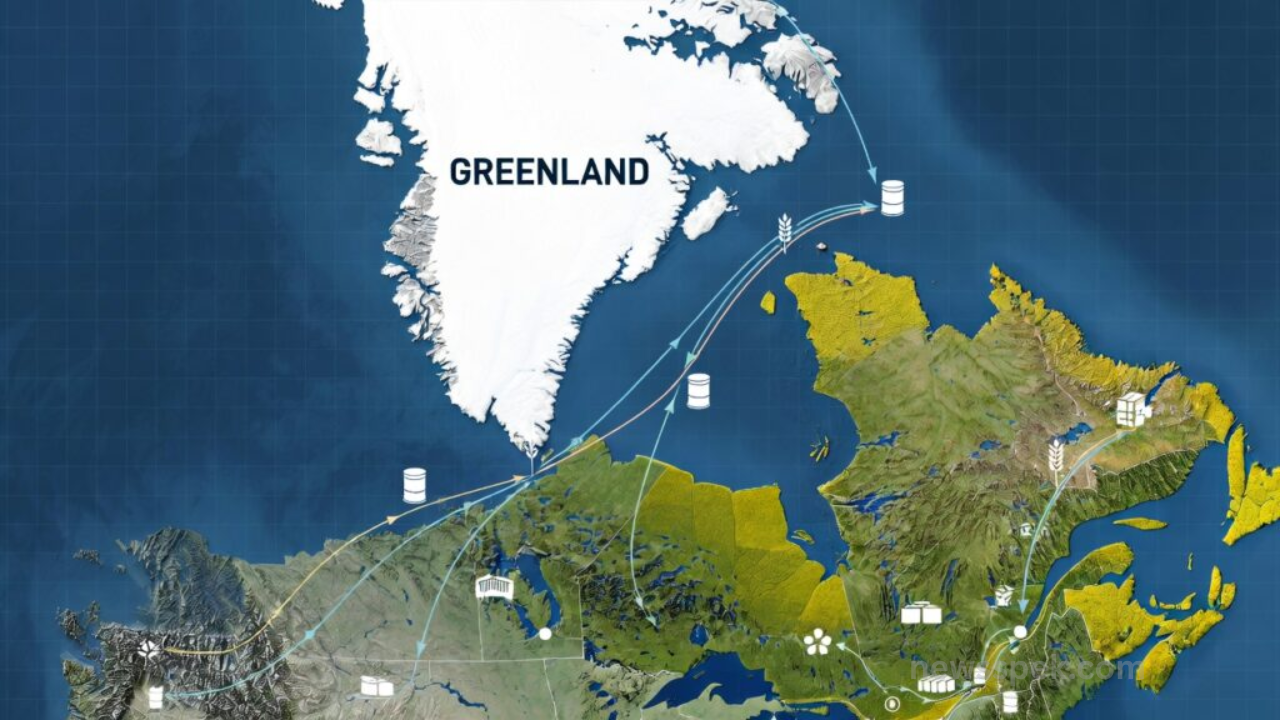
Greenland is no longer just a distant Arctic land of ice and glaciers. In recent years, shifting global politics and aggressive tariff wars have pushed Greenland into the spotlight of international commerce. These changes have quietly reshaped Greenland Trade Relations, affecting how the island connects with Europe, North America, and Asia. As 2025 approaches, Greenland’s trade decisions are starting to influence global supply chains, strategic resources, and geopolitical balance in unexpected ways.
Why Greenland Trade Relations Matters in 2025 and Beyond
Greenland Trade Relations matter today because the island sits at the intersection of climate change, geopolitics, and economic opportunity. As Arctic ice melts, access to new shipping routes and natural resources is expanding fast. This has turned Greenland into a strategic trade partner rather than a remote territory.
Greenland’s economy has long relied on fishing and subsidies from Denmark. However, recent tariff disputes between major economies have forced Greenland to rethink its trade dependencies. The island is now balancing relationships with the European Union, the United States, and emerging Asian markets.
In 2025 and beyond, Greenland Trade Relations will influence critical sectors such as rare earth minerals, sustainable energy, and Arctic logistics. These shifts could redefine power dynamics in the North Atlantic region.
Key Features or Main Highlights
Greenland Trade Relations have evolved rapidly due to a mix of economic pressure and global competition. Several key features stand out.
Strategic Location in the Arctic
Greenland’s position between North America and Europe makes it a natural trade bridge. Shorter shipping routes through Arctic waters are becoming more viable each year.
Resource Driven Trade Focus
The island holds significant reserves of rare earth elements, uranium, and zinc. These materials are essential for clean energy, electronics, and defense industries.
Reduced Reliance on Single Partners
Greenland is gradually diversifying its trade partners to reduce dependence on Denmark and the EU. This includes selective engagement with the US and Asian economies.
Sustainability Centered Policies
Trade agreements increasingly emphasize environmental protection, sustainable fishing, and responsible mining practices.
Latest Trends or Updates About Greenland Trade Relations
Recent developments show that Greenland Trade Relations are entering a new phase.
Impact of Global Tariff Wars
Ongoing tariff disputes between major economies have disrupted traditional supply chains. Greenland has responded by negotiating flexible trade arrangements that avoid being caught in trade crossfire.
Growing Interest from the United States
The US has increased diplomatic and economic engagement with Greenland, viewing it as a strategic partner for Arctic security and mineral access.
Asian Market Expansion
Countries like China, South Korea, and Japan are showing interest in Greenlandic seafood and minerals. This has opened new export channels beyond Europe.
Digital and Infrastructure Investment
Greenland is investing in ports, airports, and digital connectivity to support smoother international trade operations.
Read More: Complicated Venezuela US Intervention Debate Divides American Voters
Pros & Cons
Like any major shift, evolving Greenland Trade Relations come with advantages and drawbacks.
Pros
- Greater economic independence from Denmark
- Increased foreign investment and job creation
- Better leverage in global trade negotiations
- Expanded export markets for fisheries and minerals
Cons
- Environmental risks from mining expansion
- Political pressure from competing global powers
- Infrastructure strain in remote regions
- Trade volatility linked to global tariffs
Real-World Examples or Case Studies
Real examples help explain how Greenland Trade Relations are changing on the ground.
Rare Earth Mining Projects
Greenland has partnered with foreign firms to explore rare earth mining. These projects aim to reduce global dependence on limited suppliers while boosting Greenland’s exports.
Seafood Exports to Asia
Greenlandic shrimp and halibut have gained popularity in Asian markets. New trade routes have reduced reliance on European buyers.
US Greenland Cooperation
Joint initiatives between Greenland and the US focus on infrastructure upgrades and mineral exploration, signaling deeper trade ties.
EU Trade Adjustments
Greenland continues to trade heavily with the EU but under revised terms that reflect new tariff realities and sustainability goals.
Expert Opinions or Market Predictions
Experts believe Greenland Trade Relations will continue to evolve rapidly.
Economic Analysts
Market analysts predict steady growth in Greenland’s export value, particularly in minerals and seafood. Diversification is seen as a key strength.
Geopolitical Strategists
Policy experts warn that Greenland must carefully manage foreign interest to avoid becoming a pawn in global power struggles.
Environmental Specialists
Sustainability experts stress that long term trade success depends on strict environmental standards and local community involvement.
Trade Forecasts
By 2030, Greenland is expected to double its trade footprint outside Europe if current trends continue.
Common Myths or Misunderstandings
There are several misconceptions surrounding Greenland Trade Relations.
Greenland Is Completely Dependent on Denmark
While Denmark remains important, Greenland is actively building independent trade channels.
Trade Growth Equals Environmental Damage
Modern agreements increasingly prioritize sustainable practices and environmental safeguards.
Only Big Powers Benefit
Local communities benefit through jobs, infrastructure, and improved public services when trade is managed responsibly.
Arctic Trade Is Too Risky
Advances in technology and logistics have reduced many traditional Arctic trade risks.
Frequently Asked Questions
What is driving changes in Greenland Trade Relations?
Global tariff wars, climate change, and demand for rare resources are the main drivers.
Does Greenland trade independently?
Greenland manages many of its own trade policies despite being part of the Kingdom of Denmark.
Which countries trade most with Greenland?
The EU, United States, and Asian markets are currently the most active partners.
Are rare earth minerals important to Greenland?
Yes, they are central to Greenland’s future trade and economic strategy.
How does climate change affect Greenland trade?
Melting ice opens new shipping routes and resource access, increasing trade opportunities.
Is Greenland trade environmentally regulated?
Yes, sustainability is a core focus of recent trade agreements.
Will Greenland Trade Relations keep expanding?
Most experts expect continued expansion through 2030.
Conclusion
Greenland Trade Relations are undergoing a surprising but strategic transformation amid global tariff wars. What was once a quiet Arctic economy is now a rising player in international trade discussions. By diversifying partners, focusing on sustainable resources, and leveraging its Arctic position, Greenland is shaping a more independent economic future. As global competition intensifies, Greenland’s trade choices in 2025 and beyond will matter far more than many expect.